„Ancient Greece’s Master of Tragedy: Aeschylus, the Father of Drama.”
Introduction:
Aeschylus, often hailed as the father of tragedy, was an ancient Greek playwright whose innovations in dramatic structure and thematic depth laid the foundation for Western theater. Born around 525/524 BCE in Eleusis, a small town near Athens, Aeschylus lived during a time of significant political and cultural transformation in Greece. He participated in the Persian Wars, notably the Battle of Marathon, which profoundly influenced his work. Aeschylus is credited with expanding the number of actors in plays, allowing for more complex character interactions and dramatic tension. His surviving works, including the Oresteia trilogy, explore themes of justice, divine intervention, and human suffering, reflecting the moral and philosophical inquiries of his time. Through his pioneering contributions, Aeschylus not only shaped the trajectory of Greek drama but also left an indelible mark on the evolution of storytelling in the Western tradition.
The Role Of Fate And Justice In Aeschylus’ Works
Aeschylus, often hailed as the father of tragedy, is a seminal figure in the development of Greek drama. His works are renowned for their profound exploration of complex themes, particularly those of fate and justice. These themes are intricately woven into the fabric of his plays, reflecting the ancient Greek worldview and offering insights into the human condition. Aeschylus’s treatment of fate and justice is not only central to his narratives but also serves as a vehicle for philosophical inquiry, inviting audiences to ponder the forces that govern human life.
In Aeschylus’s oeuvre, fate is often depicted as an inexorable force, one that is beyond the control of mortals and even the gods. This portrayal aligns with the ancient Greek belief in a predetermined universe, where destiny is an unalterable path that individuals must follow. For instance, in the Oresteia trilogy, the curse on the House of Atreus exemplifies the inescapable nature of fate. The characters are ensnared in a cycle of vengeance and retribution, suggesting that their destinies are preordained by past transgressions. Aeschylus uses this narrative to illustrate the futility of resisting fate, as attempts to alter one’s destiny often lead to further suffering and chaos.
However, Aeschylus does not present fate as a purely deterministic force. Instead, he intertwines it with the concept of justice, creating a nuanced interplay between the two. Justice, in Aeschylus’s works, is portrayed as a divine principle that seeks to restore balance and order. It is both a guiding force and a moral imperative, compelling individuals to atone for their actions. In the Oresteia, the resolution of the cycle of vengeance through the establishment of the Areopagus court signifies the triumph of justice over chaos. This transition from personal retribution to institutionalized justice reflects Aeschylus’s vision of a society governed by law and reason, rather than by the capricious whims of fate.
Moreover, Aeschylus’s exploration of justice is deeply intertwined with the notion of moral responsibility. While fate may dictate the course of events, individuals are still accountable for their actions. This duality is evident in the character of Orestes, who is driven by fate to avenge his father’s murder but must also confront the moral implications of matricide. Aeschylus uses this tension to highlight the complexity of human agency, suggesting that while fate may set the stage, it is ultimately up to individuals to navigate the moral landscape.
Furthermore, Aeschylus’s works often depict the gods as arbiters of fate and justice, underscoring the divine dimension of these themes. The gods, while powerful, are not immune to the dictates of fate, and their interventions often serve to uphold justice. This divine involvement reinforces the idea that justice is a cosmic order, one that transcends human understanding. Yet, Aeschylus also portrays the gods as fallible, capable of error and subject to their own passions. This portrayal adds a layer of complexity to the interplay between fate and justice, suggesting that even divine beings are bound by the same moral and ethical considerations as mortals.
In conclusion, Aeschylus’s exploration of fate and justice is a testament to his profound understanding of the human condition. Through his intricate narratives and complex characters, he invites audiences to reflect on the forces that shape their lives and the moral choices they must make. By intertwining fate and justice, Aeschylus not only captures the essence of ancient Greek thought but also offers timeless insights into the nature of human existence.
Aeschylus’ Impact On Modern Literature And Drama
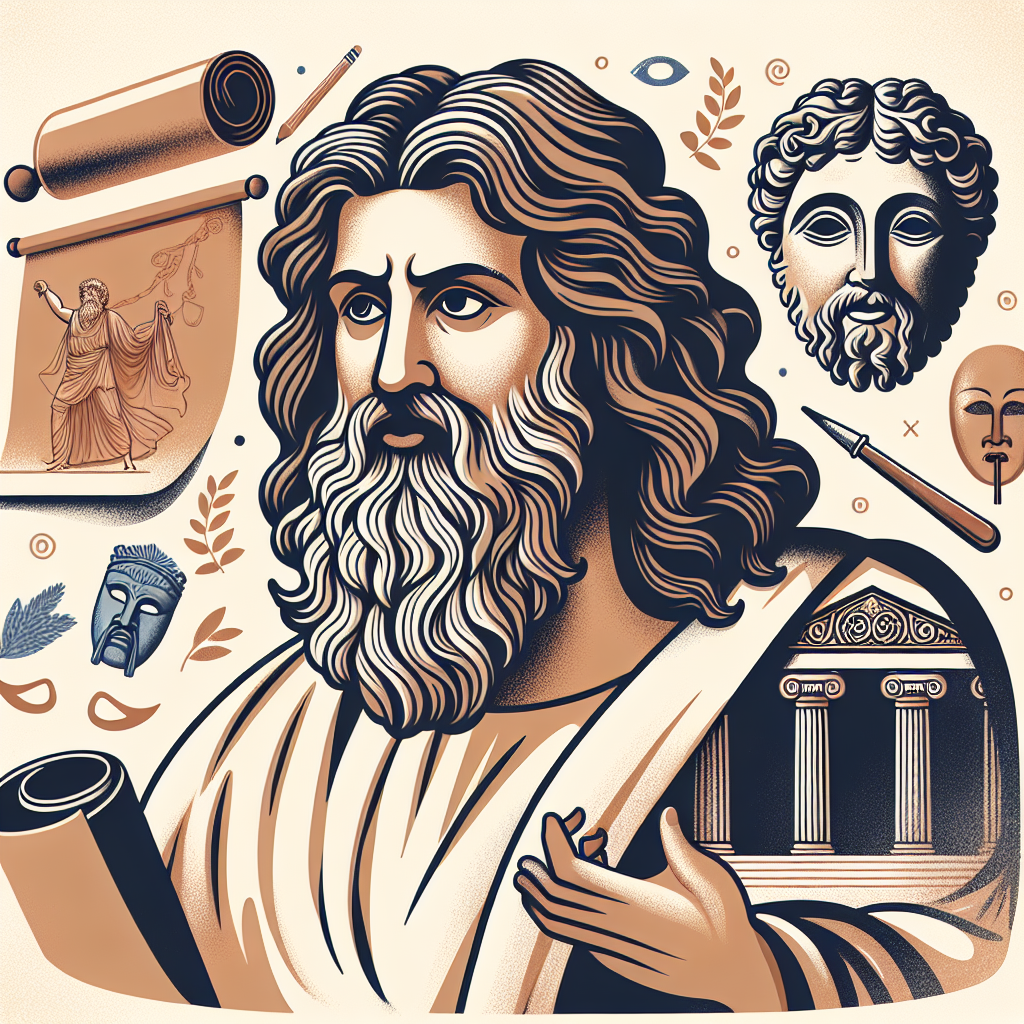
Aeschylus, often hailed as the father of tragedy, has left an indelible mark on modern literature and drama. His contributions to the theatrical arts have transcended time, influencing countless playwrights and authors who followed in his footsteps. To understand Aeschylus’s impact, it is essential to explore the innovations he introduced to the stage and how these have been adapted and expanded upon in contemporary works.
Aeschylus’s most significant contribution to drama was the introduction of the second actor, which allowed for dialogue and interaction between characters, thus transforming the nature of theatrical storytelling. Prior to this innovation, Greek drama primarily consisted of a single actor and a chorus, limiting the scope of narrative complexity. By adding a second actor, Aeschylus paved the way for more intricate plots and character development, elements that are now fundamental to modern drama. This shift not only enhanced the emotional depth of the performances but also laid the groundwork for the exploration of themes such as conflict, morality, and human nature, which continue to resonate in today’s literature.
Moreover, Aeschylus’s use of the chorus as a narrative device has also had a lasting influence. In his plays, the chorus often served as a moral compass or societal voice, providing commentary on the actions unfolding on stage. This technique has been adapted in various forms in modern literature and drama, where authors and playwrights use similar devices to offer insight or critique. For instance, the use of a narrator or a collective voice in contemporary works can be seen as a direct descendant of Aeschylus’s choral innovations, allowing for a multifaceted exploration of themes and perspectives.
In addition to structural innovations, Aeschylus’s thematic exploration of justice, fate, and the divine has permeated modern storytelling. His trilogy, „The Oresteia,” delves into the complexities of justice and revenge, themes that remain prevalent in contemporary narratives. The moral dilemmas faced by his characters echo in modern literature, where authors continue to grapple with questions of right and wrong, often drawing on Aeschylus’s exploration of these timeless issues. Furthermore, his portrayal of the gods and their influence on human affairs has inspired countless works that examine the interplay between the divine and the mortal, a theme that remains a rich source of inspiration for writers today.
Aeschylus’s impact is also evident in the way modern playwrights approach the staging of their works. His emphasis on spectacle and the use of elaborate costumes and masks have influenced the visual and aesthetic aspects of theater. This focus on the visual experience has been carried forward into contemporary productions, where directors and designers strive to create immersive environments that captivate audiences. The integration of visual elements with narrative content, a hallmark of Aeschylus’s work, continues to be a guiding principle in modern theater.
In conclusion, Aeschylus’s contributions to literature and drama have had a profound and lasting impact on the way stories are told and experienced. His innovations in character interaction, thematic exploration, and visual storytelling have shaped the evolution of drama, influencing countless writers and playwrights. As modern literature and theater continue to evolve, the legacy of Aeschylus remains a cornerstone, reminding us of the enduring power of storytelling and the timeless nature of the human experience.
Exploring The Themes In Aeschylus’ Oresteia
Aeschylus, often hailed as the father of tragedy, crafted works that have resonated through the ages, with „The Oresteia” standing as a monumental trilogy in the canon of ancient Greek literature. This trilogy, comprising „Agamemnon,” „The Libation Bearers,” and „The Eumenides,” delves deeply into themes that explore the complexities of justice, the cycle of vengeance, and the evolution of societal order. Through these themes, Aeschylus not only reflects the cultural and moral dilemmas of his time but also offers insights that remain relevant in contemporary discourse.
At the heart of „The Oresteia” lies the theme of justice, a concept that Aeschylus examines with profound depth and nuance. In „Agamemnon,” the narrative begins with the return of the eponymous king from the Trojan War, only to be murdered by his wife, Clytemnestra, as retribution for sacrificing their daughter, Iphigenia. This act of vengeance sets off a chain reaction, highlighting the primitive and personal nature of justice in the ancient world. Aeschylus uses this narrative to question the morality of retributive justice, suggesting that such actions perpetuate an endless cycle of bloodshed and suffering.
Transitioning to „The Libation Bearers,” the theme of vengeance is further explored as Orestes, the son of Agamemnon and Clytemnestra, is compelled to avenge his father’s death by killing his mother. This act of matricide, while fulfilling the ancient code of retribution, plunges Orestes into a moral and psychological crisis. Aeschylus uses Orestes’ turmoil to illustrate the destructive nature of vengeance, emphasizing that it offers no true resolution or peace. Instead, it perpetuates a cycle of violence that ensnares all who are involved. Through Orestes’ plight, Aeschylus invites the audience to reflect on the futility of revenge and the need for a more equitable form of justice.
As the trilogy progresses to „The Eumenides,” Aeschylus shifts focus to the evolution of societal order and the establishment of a more civilized form of justice. Here, Orestes seeks refuge in Athens, where he is put on trial for the murder of his mother. This trial, presided over by the goddess Athena, marks a pivotal moment in the narrative, symbolizing the transition from archaic retributive justice to a more structured and communal legal system. Aeschylus uses this transformation to underscore the importance of rationality and fairness in the administration of justice, advocating for a system that prioritizes reconciliation over retribution.
Moreover, „The Eumenides” introduces the theme of transformation and reconciliation, as the Furies, ancient deities of vengeance, are persuaded by Athena to become protectors of justice and harmony. This metamorphosis signifies the potential for change and growth within individuals and society as a whole. Aeschylus suggests that through understanding and compromise, even the most entrenched forces of vengeance can be redirected towards the greater good.
In conclusion, Aeschylus’ „The Oresteia” is a profound exploration of themes that continue to resonate with audiences today. Through its examination of justice, vengeance, and societal evolution, the trilogy offers timeless insights into the human condition and the complexities of moral and ethical decision-making. Aeschylus’ work not only reflects the cultural and philosophical concerns of ancient Greece but also provides a lens through which we can examine our own contemporary struggles with justice and order.
Aeschylus And The Evolution Of Theatrical Performance
Aeschylus, often hailed as the father of tragedy, played a pivotal role in the evolution of theatrical performance in ancient Greece. His contributions not only shaped the structure and themes of Greek drama but also laid the groundwork for future playwrights, influencing the trajectory of Western theater. To understand the significance of Aeschylus’s work, it is essential to explore the historical context in which he wrote, the innovations he introduced, and the lasting impact of his plays.
During the early 5th century BCE, Greek theater was in its nascent stages, primarily consisting of choral performances that celebrated religious festivals, particularly those dedicated to Dionysus, the god of wine and fertility. These performances were largely narrative, with a chorus recounting stories from mythology. However, Aeschylus, born around 525 BCE in Eleusis, a small town near Athens, revolutionized this format by introducing a second actor, thereby creating the possibility for dramatic dialogue and conflict. This innovation allowed for more complex storytelling and character development, setting the stage for the dramatic structure that would become a hallmark of Greek tragedy.
Aeschylus’s work is characterized by its grandeur and depth, often exploring profound themes such as justice, fate, and the divine order. His trilogy, „The Oresteia,” is a prime example of his thematic exploration. Comprising the plays „Agamemnon,” „The Libation Bearers,” and „The Eumenides,” the trilogy delves into the cycle of vengeance within the House of Atreus and ultimately advocates for the establishment of a legal system to replace personal retribution. Through this narrative, Aeschylus not only entertained his audience but also engaged them in a dialogue about the moral and social issues of his time.
Moreover, Aeschylus’s use of language and imagery was unparalleled, often employing rich metaphors and vivid descriptions to convey the emotional and psychological states of his characters. His ability to weave complex narratives with poetic elegance elevated the art form, inspiring subsequent playwrights such as Sophocles and Euripides to further develop the tragic genre. Additionally, Aeschylus is credited with enhancing the theatrical experience through the introduction of elaborate costumes and stage designs, which helped to create a more immersive and visually striking performance.
The impact of Aeschylus’s innovations extended beyond the realm of theater, influencing the cultural and intellectual landscape of ancient Greece. His plays often reflected the political and philosophical currents of his time, addressing issues such as the tension between individual agency and divine will, as well as the role of the state in maintaining social order. By engaging with these themes, Aeschylus contributed to the broader discourse on governance, ethics, and human nature, which were central to the development of Greek thought.
In conclusion, Aeschylus’s contributions to the evolution of theatrical performance were both profound and far-reaching. By transforming the structure of Greek drama and infusing it with rich thematic content, he not only entertained audiences but also challenged them to reflect on the complexities of human existence. His legacy endures in the continued study and performance of his works, which remain a testament to the enduring power of theater as a medium for storytelling and social commentary. Through his innovations, Aeschylus laid the foundation for the rich tradition of Western drama, ensuring his place as a seminal figure in the history of theater.
The Influence Of Aeschylus On Greek Tragedy
Aeschylus, often hailed as the father of Greek tragedy, holds a pivotal place in the annals of ancient literature. His contributions to the development of Greek drama are profound, and his influence extends far beyond his own era, shaping the trajectory of theatrical arts for centuries to come. To fully appreciate the impact of Aeschylus on Greek tragedy, it is essential to explore the innovations he introduced and the thematic depth he brought to the stage.
Aeschylus was born around 525 BCE in Eleusis, a small town near Athens, during a time when Greek drama was still in its nascent stages. Prior to his contributions, Greek plays were primarily choral performances with limited dialogue. Aeschylus revolutionized this format by introducing a second actor, thereby creating the potential for dramatic dialogue and conflict. This innovation allowed for more complex storytelling and character development, laying the groundwork for the dramatic structure that would become a hallmark of Greek tragedy.
Moreover, Aeschylus expanded the role of the chorus, transforming it from a mere commentator on the action to an integral part of the narrative. His choruses were not only participants in the drama but also provided philosophical reflections and thematic commentary, enriching the audience’s understanding of the play’s moral and ethical dimensions. This integration of the chorus into the fabric of the narrative was a significant departure from earlier practices and set a precedent for subsequent playwrights.
In addition to structural innovations, Aeschylus is renowned for the thematic depth of his works. His tragedies often grapple with profound questions of justice, fate, and the divine order, reflecting the complex interplay between human agency and the will of the gods. For instance, in his seminal trilogy, the Oresteia, Aeschylus explores the cycle of vengeance and the eventual establishment of legal justice, highlighting the evolution of societal norms and the transition from personal retribution to institutionalized law. This thematic exploration not only resonated with contemporary audiences but also provided a framework for future playwrights to examine similar issues.
Furthermore, Aeschylus’s influence is evident in his use of language and imagery. His poetic style is characterized by its grandeur and vivid imagery, which evoke the majesty and terror of the divine. This elevated language not only enhanced the dramatic impact of his plays but also set a standard for the poetic quality expected in Greek tragedy. His ability to convey complex ideas through powerful imagery and metaphor left an indelible mark on the genre, inspiring later tragedians such as Sophocles and Euripides to adopt and adapt his stylistic techniques.
In conclusion, Aeschylus’s contributions to Greek tragedy are both foundational and transformative. Through his structural innovations, thematic explorations, and poetic mastery, he not only elevated the art form but also laid the groundwork for future generations of playwrights. His influence is evident in the works of his successors, who built upon his legacy to further develop the rich tradition of Greek drama. As such, Aeschylus’s impact on Greek tragedy is both profound and enduring, cementing his status as a towering figure in the history of literature.
Conclusion
Aeschylus, often regarded as the father of tragedy, was a seminal figure in the development of ancient Greek drama. His innovations in theatrical structure, such as the introduction of a second actor, expanded the potential for dramatic dialogue and complex storytelling. Aeschylus’s works, including the renowned „Oresteia” trilogy, are characterized by their profound exploration of themes like justice, divine intervention, and human suffering. His influence on the genre is profound, setting the stage for later playwrights like Sophocles and Euripides. Through his pioneering contributions, Aeschylus not only shaped the trajectory of Greek tragedy but also left an enduring legacy on the broader landscape of Western literature and theater.