„John Calvin: Architect of Reformation, Shaper of Faith.”
Introduction
John Calvin was a prominent French theologian, pastor, and reformer in the Protestant Reformation of the 16th century. Born on July 10, 1509, in Noyon, France, Calvin was a principal figure in the development of the system of Christian theology later called Calvinism, aspects of which include the doctrines of predestination and the absolute sovereignty of God in salvation. His seminal work, „Institutes of the Christian Religion,” first published in 1536, laid the foundation for Reformed theology and became a pivotal text for Protestant reformers. Calvin’s influence extended beyond theology; he played a crucial role in the establishment of a disciplined, moral society in Geneva, where he implemented a rigorous ecclesiastical structure and governance. His teachings and writings have had a lasting impact on Protestantism and continue to be studied and revered in various Christian traditions worldwide.
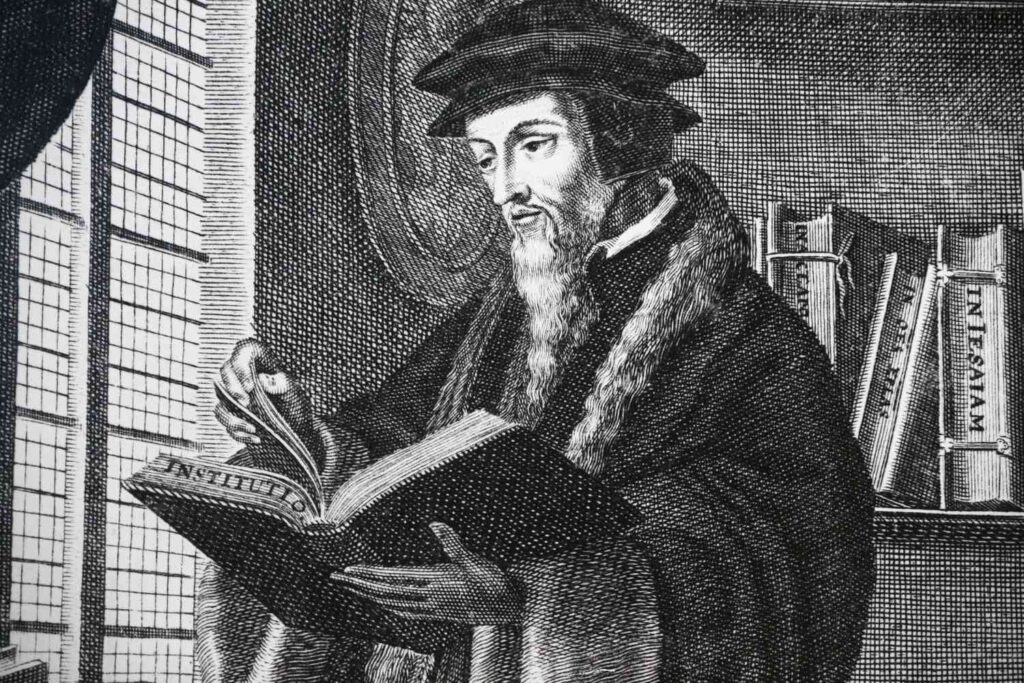
The Life And Legacy Of John Calvin
John Calvin, a seminal figure in the Protestant Reformation, was born on July 10, 1509, in Noyon, France. His contributions to theology and the development of Protestantism have left an indelible mark on religious thought and practice. Calvin’s early life was marked by a rigorous education, initially intended to prepare him for a career in the Catholic Church. However, as he delved deeper into his studies, he became increasingly influenced by the burgeoning ideas of reform that were sweeping across Europe. This intellectual awakening led him to break away from the Catholic Church and align himself with the Protestant Reformation.
Calvin’s most significant contribution to Protestant theology is undoubtedly his work „Institutes of the Christian Religion,” first published in 1536. This comprehensive theological treatise laid the foundation for what would become known as Calvinism. In it, Calvin articulated his views on the sovereignty of God, the nature of human sin, and the doctrine of predestination. These ideas were revolutionary at the time and provided a systematic framework for understanding Protestant beliefs. Calvin’s emphasis on the authority of Scripture and the necessity of grace for salvation resonated with many who were disillusioned with the Catholic Church’s practices and teachings.
In addition to his theological writings, Calvin’s role as a pastor and leader in Geneva, Switzerland, was instrumental in shaping the Reformation. Arriving in Geneva in 1536, Calvin was initially met with resistance. However, his unwavering commitment to reform and his ability to articulate a clear vision for a reformed church eventually won him the support of the city’s leaders. Under Calvin’s guidance, Geneva became a model of Protestant governance and a center for religious education. His establishment of the Geneva Academy in 1559 further solidified the city’s reputation as a hub for Protestant scholarship and training.
Calvin’s influence extended beyond Geneva, as his ideas spread throughout Europe and beyond. His correspondence with other reformers and his involvement in various religious disputes helped to disseminate his teachings. Calvinism took root in countries such as France, the Netherlands, Scotland, and England, where it played a crucial role in shaping religious and political landscapes. The Puritans, who later settled in North America, were heavily influenced by Calvinist theology, further extending his legacy.
Despite his significant contributions, Calvin’s legacy is not without controversy. His strict adherence to his theological principles and his role in the execution of Michael Servetus, a Spanish physician and theologian accused of heresy, have been points of contention among historians and theologians. Nevertheless, Calvin’s impact on the development of Protestantism is undeniable. His emphasis on the sovereignty of God and the authority of Scripture continues to influence Christian thought and practice today.
In conclusion, John Calvin’s life and legacy are integral to understanding the Protestant Reformation and its enduring impact on Christianity. His theological insights and leadership in Geneva helped to shape a movement that transformed religious, cultural, and political landscapes across the globe. As a result, Calvin remains a pivotal figure in the history of Christianity, whose ideas continue to resonate with believers and scholars alike.
The Impact Of John Calvin’s Writings On Modern Christianity
John Calvin, a seminal figure in the Protestant Reformation, has left an indelible mark on modern Christianity through his extensive writings and theological insights. His influence is particularly evident in the development of Reformed theology, which continues to shape the beliefs and practices of numerous Christian denominations today. Calvin’s most significant work, „Institutes of the Christian Religion,” serves as a foundational text for understanding his theological perspective. This comprehensive treatise systematically outlines his views on key doctrinal issues, such as the sovereignty of God, the nature of humanity, and the process of salvation. By articulating these concepts with clarity and depth, Calvin provided a robust framework that has guided theologians and laypeople alike for centuries.
One of the central tenets of Calvin’s theology is the doctrine of predestination, which posits that God has predetermined the eternal destiny of every individual. This idea, while controversial, underscores the absolute sovereignty of God, a theme that permeates Calvin’s writings. By emphasizing God’s ultimate authority, Calvin challenged the prevailing religious structures of his time, which often placed undue emphasis on human agency and ecclesiastical hierarchy. Consequently, his teachings encouraged a shift towards a more personal and direct relationship with the divine, a notion that resonates with many contemporary Christians who seek a faith experience unmediated by institutional constraints.
Moreover, Calvin’s emphasis on the authority of Scripture has had a lasting impact on modern Christianity. He advocated for the primacy of the Bible as the ultimate source of religious truth, a stance that has been embraced by numerous Protestant denominations. This focus on scriptural authority has fostered a culture of biblical literacy and interpretation, encouraging believers to engage with the text critically and thoughtfully. As a result, Calvin’s writings have contributed to a vibrant tradition of theological inquiry and debate, which continues to enrich the intellectual and spiritual life of the church.
In addition to his theological contributions, Calvin’s writings have also influenced the social and political dimensions of Christianity. His ideas on church governance, for instance, laid the groundwork for the development of Presbyterian polity, characterized by a system of representative leadership and decision-making. This model has been adopted by various denominations, promoting a more democratic and participatory approach to church administration. Furthermore, Calvin’s emphasis on the moral and ethical responsibilities of Christians has inspired social reform movements throughout history, encouraging believers to engage with issues of justice and equity in their communities.
Calvin’s impact extends beyond the confines of Reformed theology, as his writings have been instrumental in shaping broader Christian thought. His rigorous approach to theology and his commitment to intellectual engagement have set a standard for theological scholarship that continues to influence academic discourse. Additionally, his insights into the human condition and the nature of divine grace have resonated with believers across denominational lines, offering a profound understanding of the complexities of faith and existence.
In conclusion, the writings of John Calvin have had a profound and lasting impact on modern Christianity. Through his theological insights, emphasis on scriptural authority, and contributions to church governance, Calvin has shaped the beliefs and practices of countless Christians. His legacy endures in the ongoing dialogue between faith and reason, as believers continue to grapple with the enduring questions of theology and spirituality. As such, Calvin’s influence remains a vital and dynamic force within the Christian tradition, guiding and inspiring future generations of believers.
John Calvin’s Role In The Development Of Reformed Theology
John Calvin, a seminal figure in the Protestant Reformation, played a pivotal role in the development of Reformed theology, a branch of Protestantism that has profoundly influenced Christian thought and practice. Born in 1509 in Noyon, France, Calvin was initially trained as a lawyer, but his life took a decisive turn when he embraced the Reformation movement. His theological insights and organizational skills helped shape the contours of Reformed theology, which continues to resonate in various Christian denominations today.
Calvin’s influence is most prominently seen in his magnum opus, „Institutes of the Christian Religion,” first published in 1536. This work systematically articulated the principles of Reformed theology, providing a comprehensive framework for understanding Christian doctrine. Through the „Institutes,” Calvin emphasized the sovereignty of God, the authority of Scripture, and the doctrine of predestination, which became foundational tenets of Reformed thought. His insistence on the primacy of Scripture was a direct challenge to the Catholic Church’s reliance on tradition and ecclesiastical authority, thus reinforcing the Reformation’s call for a return to biblical foundations.
Moreover, Calvin’s theological contributions were not limited to abstract doctrine; they had practical implications for church governance and worship. He advocated for a presbyterian form of church government, which emphasized the role of elected elders and de-emphasized hierarchical structures. This model of governance was implemented in Geneva, where Calvin spent much of his life, transforming the city into a center of Reformed thought and practice. The Genevan model became a blueprint for Reformed churches across Europe and later in the Americas, illustrating Calvin’s lasting impact on ecclesiastical organization.
In addition to governance, Calvin’s views on worship were influential. He promoted simplicity in worship, focusing on preaching and the sacraments as central elements. This approach was a departure from the elaborate rituals of the Catholic Church, aligning with the Reformation’s emphasis on personal faith and direct access to God. Calvin’s liturgical reforms underscored his belief in the importance of congregational participation and the intelligibility of worship, which have become hallmarks of Reformed worship practices.
Furthermore, Calvin’s role in the development of Reformed theology extended beyond his writings and reforms in Geneva. His correspondence with other reformers and leaders across Europe facilitated the spread of Reformed ideas, creating a network of like-minded individuals who furthered the cause of the Reformation. Calvin’s influence reached Scotland through John Knox, who studied in Geneva and later established Presbyterianism as the national church of Scotland. Similarly, Calvinism found fertile ground in the Netherlands, France, and parts of Germany, where it became a significant religious and cultural force.
In conclusion, John Calvin’s role in the development of Reformed theology was multifaceted and far-reaching. His theological writings, particularly the „Institutes,” provided a robust framework for Reformed thought, while his reforms in church governance and worship practices set a precedent for future generations. Through his leadership in Geneva and his extensive correspondence, Calvin helped to disseminate Reformed ideas across Europe, leaving an indelible mark on the religious landscape. His legacy endures in the many denominations and traditions that trace their roots to his teachings, underscoring his enduring influence on Christianity.
Understanding Calvin’s Doctrine Of Predestination
John Calvin, a seminal figure in the Protestant Reformation, is perhaps best known for his doctrine of predestination, a theological concept that has sparked considerable debate and discussion over the centuries. To understand Calvin’s doctrine of predestination, it is essential to first consider the historical and theological context in which he developed his ideas. Calvin lived during a time of significant religious upheaval, where questions about salvation, divine sovereignty, and human agency were at the forefront of theological discourse. Against this backdrop, Calvin sought to articulate a vision of God’s sovereignty that was both comprehensive and coherent.
Central to Calvin’s doctrine of predestination is the belief in God’s absolute sovereignty and omniscience. Calvin posited that God, in His infinite wisdom and power, has predetermined the eternal destiny of every individual. This means that before the foundation of the world, God chose some people for salvation and others for damnation. This choice, according to Calvin, is not based on any foreseen merit or action on the part of individuals but is solely the result of God’s will and purpose. This concept is often referred to as „unconditional election,” highlighting the idea that God’s choice is not contingent upon human actions or decisions.
To further elucidate this doctrine, Calvin drew heavily on biblical texts, particularly the writings of the Apostle Paul. For instance, in his interpretation of Romans 9, Calvin emphasized the notion that God’s mercy and judgment are ultimately inscrutable and beyond human comprehension. He argued that, like a potter with clay, God has the right to shape and determine the fate of His creation according to His divine plan. This analogy underscores the idea that God’s will is paramount and that human beings, as part of creation, are subject to His sovereign decree.
While Calvin’s doctrine of predestination underscores God’s sovereignty, it also raises questions about human free will and responsibility. Critics of Calvin’s view often argue that it negates human agency and moral accountability. However, Calvin maintained that divine predestination does not nullify human responsibility. He contended that God’s foreordination operates in harmony with human actions, though the precise nature of this relationship remains a mystery. Calvin believed that individuals are still accountable for their choices and that God’s predestining work does not coerce or compel human will.
Moreover, Calvin’s doctrine of predestination was not intended to foster despair or fatalism among believers. Instead, he saw it as a source of comfort and assurance. For Calvin, the knowledge that one’s salvation is rooted in God’s eternal and unchangeable will provides a profound sense of security. Believers can rest in the confidence that their salvation is not dependent on their own efforts but is a gift of God’s grace. This assurance, Calvin argued, should inspire gratitude and a life of faithful obedience.
In conclusion, John Calvin’s doctrine of predestination is a complex and nuanced theological concept that reflects his deep commitment to the sovereignty of God. While it has been the subject of much debate, it remains a central tenet of Reformed theology. By emphasizing God’s ultimate authority and the assurance of salvation, Calvin’s doctrine continues to influence Christian thought and practice, inviting believers to ponder the mysteries of divine grace and human destiny.
John Calvin’s Influence On The Protestant Reformation
John Calvin, a seminal figure in the Protestant Reformation, profoundly influenced the religious landscape of the 16th century and beyond. His theological insights and organizational skills helped shape the course of Protestantism, leaving a lasting legacy that continues to resonate in contemporary religious thought. Born in 1509 in Noyon, France, Calvin initially pursued a career in law, but his interests soon shifted towards theology. This transition was catalyzed by the burgeoning Reformation movement, which sought to challenge the doctrines and practices of the Roman Catholic Church.
Calvin’s most significant contribution to the Reformation was his development of a systematic theology, articulated in his seminal work, „Institutes of the Christian Religion.” First published in 1536, this text laid out a comprehensive framework for understanding Christian doctrine from a Reformed perspective. Calvin’s emphasis on the sovereignty of God, predestination, and the authority of Scripture became foundational tenets of Reformed theology. His ideas provided a coherent alternative to Catholic doctrine, appealing to many who were disillusioned with the Church’s perceived corruption and excesses.
Moreover, Calvin’s influence extended beyond theology into the realm of church organization and governance. In Geneva, where he spent much of his life, Calvin implemented a model of church government that emphasized the role of lay elders and pastors in decision-making processes. This presbyterian system of governance contrasted sharply with the hierarchical structure of the Catholic Church, promoting a more democratic and participatory approach to church leadership. Calvin’s model was adopted by many Reformed churches across Europe, contributing to the spread of Protestantism and the diversification of Christian practice.
In addition to his theological and organizational contributions, Calvin was a prolific writer and preacher. His commentaries on the Bible were widely read and respected, offering detailed exegesis and practical application of Scripture. Calvin’s sermons, delivered with clarity and conviction, attracted large audiences and inspired many to embrace Reformed beliefs. His ability to communicate complex theological concepts in an accessible manner helped to disseminate Reformed ideas to a broader audience, further solidifying his influence on the Reformation.
Furthermore, Calvin’s impact was not confined to Europe. His teachings found fertile ground in the New World, where they influenced the development of Protestant communities in North America. The Puritans, who sought to establish a „city upon a hill” in the American colonies, were deeply influenced by Calvinist theology. This influence is evident in the emphasis on hard work, moral discipline, and community governance that characterized early American society.
Despite his significant contributions, Calvin’s legacy is not without controversy. His role in the execution of Michael Servetus, a Spanish physician and theologian who rejected the doctrine of the Trinity, has been a point of contention among historians and theologians. This incident highlights the complexities of Calvin’s character and the challenges of navigating religious reform in a tumultuous era.
In conclusion, John Calvin’s influence on the Protestant Reformation was profound and multifaceted. His theological insights, organizational innovations, and communicative prowess helped to shape the course of Protestantism and left an indelible mark on the religious landscape. While his legacy is complex and occasionally contentious, Calvin’s contributions to the Reformation remain a testament to his enduring impact on Christian thought and practice.
Conclusion
John Calvin was a pivotal figure in the Protestant Reformation, known for his influential role in the development of Reformed theology, particularly through his seminal work, „Institutes of the Christian Religion.” His teachings emphasized the sovereignty of God, predestination, and the authority of Scripture, shaping the theological framework of Calvinism. Calvin’s impact extended beyond theology to church governance and social ethics, as he implemented a model of church organization in Geneva that influenced Protestant communities across Europe. His legacy persists in various Reformed denominations and continues to be a subject of study and debate in theological and historical contexts.