„Journey Through Time: Unveiling the Mysteries of the Middle Ages”
Introduction
The Middle Ages, also known as the medieval period, spanned roughly from the 5th to the late 15th century, marking a significant era in European history. Following the fall of the Western Roman Empire, this period was characterized by the rise of feudalism, the spread of Christianity, and the establishment of kingdoms and empires that laid the groundwork for modern European states. The Middle Ages witnessed the construction of iconic architectural structures such as castles and cathedrals, the flourishing of monastic life, and the emergence of universities. It was a time of both cultural stagnation and intellectual revival, culminating in the Renaissance. The era is often divided into the Early, High, and Late Middle Ages, each with distinct developments in politics, society, and culture.
The Impact Of The Black Death On Europe
The Black Death, a devastating pandemic that swept through Europe in the mid-14th century, had profound and far-reaching impacts on the continent. Originating in Asia, the disease made its way to Europe in 1347, carried by fleas on rats that traveled aboard merchant ships. As the plague spread rapidly across the continent, it decimated the population, killing an estimated 25 to 30 million people, which was about one-third of Europe’s population at the time. This catastrophic loss of life had significant social, economic, and cultural consequences that reshaped European society in numerous ways.
Economically, the Black Death led to a severe labor shortage as the workforce was drastically reduced. This scarcity of laborers resulted in increased wages for peasants and workers, as landowners and employers competed to attract the limited number of available workers. Consequently, the traditional feudal system, which had dominated medieval Europe, began to weaken. Serfs, who were previously bound to the land and subject to the will of their lords, found themselves in a position to demand better working conditions and greater freedoms. This shift contributed to the gradual decline of feudalism and the rise of a more market-oriented economy.
In addition to economic changes, the Black Death also had significant social implications. The massive loss of life led to a breakdown of traditional social structures and a questioning of established norms. The Church, which had been a central institution in medieval life, faced criticism and skepticism as it struggled to provide answers and solace in the face of the plague. Many people began to question the Church’s authority and its ability to intercede with God on their behalf, leading to a decline in its influence. This growing disillusionment with the Church set the stage for future religious reforms and movements, such as the Protestant Reformation.
Culturally, the impact of the Black Death was equally profound. The pervasive sense of mortality and the fragility of life inspired a shift in artistic and literary expressions. Themes of death and the macabre became prevalent in art and literature, reflecting the collective trauma experienced by society. This period saw the emergence of works that explored human suffering and the transience of life, contributing to a more introspective and somber cultural landscape. Moreover, the pandemic prompted a reevaluation of medical practices and a renewed interest in scientific inquiry, as people sought to understand and combat the disease.
Furthermore, the Black Death had long-term demographic effects. The significant reduction in population led to changes in land use and agricultural practices. With fewer people to cultivate the land, marginal lands were abandoned, and more efficient farming techniques were adopted. This shift contributed to an increase in agricultural productivity over time, which eventually supported population growth and urbanization in the following centuries.
In conclusion, the Black Death was a pivotal event in European history that had lasting impacts on the continent’s economic, social, and cultural fabric. By disrupting established systems and prompting a reevaluation of traditional beliefs and practices, the pandemic set in motion a series of changes that would shape the course of European development for centuries to come. The legacy of the Black Death serves as a reminder of the profound ways in which pandemics can alter the trajectory of human societies.
Knights And Chivalry: Myths And Realities
The Middle Ages, a period spanning roughly from the 5th to the late 15th century, is often romanticized as an era of gallant knights and noble chivalry. However, the reality of knights and their code of conduct is far more complex than the myths that have been perpetuated through literature and popular culture. To understand the true nature of knighthood and chivalry, it is essential to delve into the historical context and societal structures of the time.
Knighthood in the Middle Ages was not merely a title bestowed upon noble warriors; it was a multifaceted institution deeply embedded in the feudal system. Knights were typically vassals to a lord, bound by oaths of loyalty and service. In return for their military service, they were granted land or fiefs, which provided them with the resources necessary to maintain their status and equip themselves for battle. This reciprocal relationship was fundamental to the feudal hierarchy, ensuring mutual obligations between lords and their knights.
The concept of chivalry, often associated with knights, was a code of conduct that evolved over time. Initially, it was primarily a martial ethos emphasizing bravery, skill in combat, and loyalty to one’s lord. However, as the Middle Ages progressed, chivalry began to encompass a broader set of ideals, including courtly love, piety, and the protection of the weak. This evolution was influenced by the Church, which sought to temper the violence of the warrior class by promoting Christian virtues.
Despite the idealized image of chivalry, the reality was often quite different. Knights were, first and foremost, warriors, and their primary function was to fight. The brutality of medieval warfare, with its sieges, raids, and battles, was a far cry from the romanticized duels and tournaments depicted in later literature. Moreover, the chivalric code was not universally adhered to; knights could be ruthless and self-serving, driven by personal ambition and the pursuit of wealth and power.
The literature of the Middle Ages, particularly the chansons de geste and Arthurian romances, played a significant role in shaping the myth of the chivalrous knight. These works, while entertaining and influential, often presented an idealized version of knighthood that was removed from reality. Characters like Sir Lancelot and Sir Gawain embodied the virtues of chivalry, yet their stories were more reflective of the aspirations and values of the time than the actual behavior of knights.
Furthermore, the notion of courtly love, a key component of chivalric literature, was largely a literary construct. It depicted knights as devoted to their lady loves, engaging in noble deeds to win their favor. In practice, however, marriages among the nobility were often arranged for political and economic reasons, with little regard for romantic love.
In conclusion, while the myths of knights and chivalry continue to captivate our imagination, it is important to recognize the realities of the Middle Ages. Knights were complex figures, shaped by the social, political, and religious forces of their time. The chivalric code, though influential, was not always adhered to, and the romanticized image of the noble knight often diverged from the harsh realities of medieval life. By examining the historical context, we gain a more nuanced understanding of this fascinating period and the enduring legacy of its myths and realities.
The Role Of The Church In Medieval Society
During the Middle Ages, the Church emerged as a pivotal institution, wielding immense influence over various aspects of medieval society. This period, spanning roughly from the 5th to the late 15th century, witnessed the Church not only as a spiritual authority but also as a dominant force in political, economic, and cultural spheres. To understand the multifaceted role of the Church during this era, it is essential to explore its pervasive presence and impact on medieval life.
Initially, the Church served as the primary spiritual guide for the people of the Middle Ages. It provided a framework for understanding the world through a religious lens, offering solace and hope in a time marked by uncertainty and hardship. The Church’s teachings permeated daily life, influencing moral values and ethical conduct. Through its network of parishes, monasteries, and cathedrals, the Church facilitated religious observance and community cohesion, fostering a sense of shared identity among believers.
Moreover, the Church played a crucial role in the political landscape of medieval Europe. As a unifying force, it transcended regional boundaries and local allegiances, often acting as a mediator in conflicts between feuding nobles or rival kingdoms. The papacy, in particular, wielded significant power, with popes often asserting authority over secular rulers. This dynamic was exemplified by events such as the Investiture Controversy, where the Church and the Holy Roman Empire clashed over the appointment of bishops. Such instances underscore the Church’s ability to influence political affairs and shape the course of history.
In addition to its spiritual and political roles, the Church was a major economic entity during the Middle Ages. It amassed considerable wealth through donations, tithes, and land ownership, becoming one of the largest landholders in Europe. Monasteries, in particular, were centers of economic activity, engaging in agriculture, production, and trade. The Church’s economic power enabled it to fund the construction of grand cathedrals and support charitable endeavors, further solidifying its position within society.
Culturally, the Church was a custodian of knowledge and education. Monasteries and cathedral schools became centers of learning, preserving classical texts and fostering intellectual pursuits. The Church’s emphasis on literacy and scholarship laid the groundwork for the eventual rise of universities in the later Middle Ages. Additionally, the Church influenced art and architecture, with Romanesque and Gothic styles reflecting religious themes and serving as expressions of faith. Through its patronage, the Church played a vital role in shaping the cultural landscape of the medieval world.
Despite its many contributions, the Church’s dominance was not without controversy. Instances of corruption, such as simony and nepotism, occasionally marred its reputation. Furthermore, the Church’s rigid doctrines sometimes stifled scientific inquiry and dissenting views. Nevertheless, its overarching influence on medieval society is undeniable.
In conclusion, the Church was a cornerstone of medieval life, intricately woven into the fabric of society. Its spiritual guidance, political authority, economic power, and cultural contributions were instrumental in shaping the Middle Ages. As a multifaceted institution, the Church left an indelible mark on history, influencing the development of Western civilization in profound and lasting ways. Through its enduring legacy, the Church of the Middle Ages continues to be a subject of fascination and study, offering insights into a complex and transformative period in human history.
Daily Life In A Medieval Village
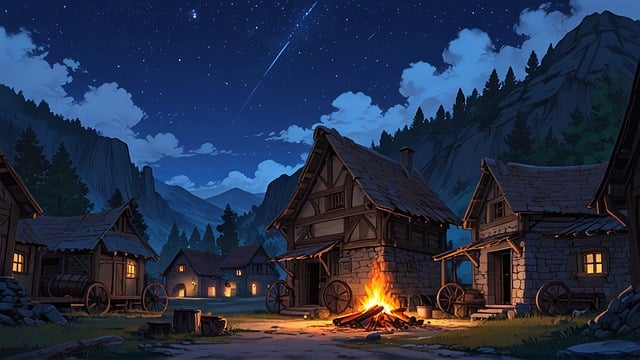
In the tapestry of history, the Middle Ages stand out as a period marked by profound transformation and enduring traditions. Daily life in a medieval village was a complex interplay of social structures, economic activities, and cultural practices, all of which were deeply influenced by the feudal system. At the heart of this system was the manor, a self-sufficient estate controlled by a lord, where peasants, or serfs, worked the land in exchange for protection and a place to live. This arrangement defined the rhythm of life for the majority of the population, who were bound to the land and its cycles.
The daily routine of a medieval villager was dictated by the agrarian calendar, with each season bringing its own set of tasks and challenges. Spring was a time of renewal and hard labor, as fields were plowed and sown with crops such as wheat, barley, and oats. Summer demanded long hours in the fields, tending to the growing plants and ensuring their health. The autumn harvest was a critical period, as the yield determined the community’s sustenance for the coming year. Winter, though less demanding in terms of agricultural work, was a time of preparation and maintenance, as villagers repaired tools and buildings, and preserved food for the lean months ahead.
In addition to farming, villagers engaged in various crafts and trades to support the community’s needs. Blacksmiths, carpenters, and weavers were essential, providing tools, furniture, and clothing. These artisans often worked in small workshops, passing their skills down through generations. The village market was a focal point for trade, where surplus goods could be exchanged, and news from beyond the manor could be shared. This exchange of goods and information was vital, as it connected the isolated village to the broader medieval world.
Social life in a medieval village was closely tied to the Church, which played a central role in the lives of the villagers. The local parish church was not only a place of worship but also a hub for community gatherings and celebrations. Religious festivals punctuated the year, offering respite from the toil of daily life and reinforcing communal bonds. The Church also provided education, albeit limited, with monks and priests teaching basic literacy and religious doctrine to a select few.
Despite the hardships and constraints of medieval life, villagers found ways to enjoy leisure and entertainment. Traditional games, music, and storytelling were popular pastimes, offering a welcome diversion from the rigors of work. Seasonal festivals and fairs provided opportunities for merriment and socializing, as well as the chance to experience the wider world through traveling performers and merchants.
The hierarchical nature of medieval society meant that life in a village was characterized by a clear division of roles and responsibilities. The lord of the manor wielded significant power, overseeing the administration of justice and the management of resources. In contrast, the serfs and peasants had limited autonomy, their lives shaped by the demands of their labor and the obligations of their status. However, this interdependence also fostered a sense of community, as villagers relied on one another for support and survival.
In conclusion, daily life in a medieval village was a tapestry woven from the threads of labor, faith, and community. While the challenges were many, the resilience and resourcefulness of the villagers enabled them to navigate the complexities of their world, leaving a legacy that continues to captivate our imagination today.
The Rise And Fall Of Feudalism
The Middle Ages, a period spanning roughly from the 5th to the late 15th century, witnessed the rise and fall of feudalism, a socio-economic system that profoundly shaped medieval Europe. This era, often characterized by its hierarchical structure, saw the establishment of a system where land was the primary source of wealth and power. As the Roman Empire crumbled, Europe was left fragmented and vulnerable to invasions. In response to this instability, feudalism emerged as a means to restore order and provide protection.
At the heart of feudalism was the relationship between lords and vassals. Lords, often landowners or nobles, granted parcels of land known as fiefs to vassals in exchange for military service and loyalty. This reciprocal arrangement created a network of obligations that bound individuals to one another, ensuring mutual support and defense. The vassals, in turn, could become lords to lesser vassals, perpetuating a tiered system of governance and allegiance. This structure not only provided security but also facilitated the management of vast territories, as central authority was often weak or nonexistent.
Moreover, the manorial system complemented feudalism by organizing agricultural production. Manors, self-sufficient estates controlled by lords, were the economic backbone of feudal society. Peasants, or serfs, worked the land and produced goods in exchange for protection and a place to live. Although serfs were not slaves, their freedom was limited, as they were bound to the land and subject to the lord’s authority. This arrangement ensured a stable food supply and allowed lords to focus on military and political matters.
However, as time progressed, several factors contributed to the decline of feudalism. One significant catalyst was the growth of trade and commerce, which began to flourish in the 11th century. The revival of long-distance trade routes and the rise of towns and cities provided new economic opportunities that were not tied to the land. As a result, a burgeoning merchant class emerged, challenging the traditional feudal order and introducing a more dynamic economy.
Additionally, the Black Death, which swept through Europe in the 14th century, decimated the population and disrupted the feudal system. With a significant portion of the workforce wiped out, labor became scarce, and surviving peasants found themselves in a stronger bargaining position. Many demanded better working conditions and higher wages, leading to social unrest and weakening the manorial system.
Furthermore, the Hundred Years’ War between England and France demonstrated the limitations of feudal armies, which were often composed of knights bound by feudal obligations. The war highlighted the need for professional standing armies, funded by centralized monarchies rather than feudal levies. This shift in military organization further eroded the power of feudal lords and strengthened the authority of kings.
In conclusion, the rise and fall of feudalism in the Middle Ages were driven by a complex interplay of social, economic, and political factors. While it provided a framework for stability and order in a tumultuous period, the system ultimately could not withstand the transformative forces of trade, disease, and warfare. As Europe transitioned into the Renaissance, the remnants of feudalism gave way to new forms of governance and economic structures, paving the way for the modern era.
Conclusion
The Middle Ages, spanning roughly from the 5th to the late 15th century, was a period of significant transformation in Europe. It began with the fall of the Western Roman Empire and transitioned into the Renaissance and the Age of Discovery. This era was marked by the feudal system, the rise of powerful monarchies, and the pervasive influence of the Catholic Church. It witnessed the construction of iconic cathedrals, the Crusades, and the spread of monasticism. Despite being often labeled as the „Dark Ages,” the Middle Ages also saw the preservation and transmission of classical knowledge, the emergence of universities, and advancements in art, architecture, and technology. The period laid foundational cultural, political, and social structures that shaped the trajectory of European history.