„Timeless Maestro of Melody and Genius of Harmony”
Introduction:

Wolfgang Amadeus Mozart, born on January 27, 1756, in Salzburg, Austria, is one of the most celebrated and influential composers in the history of Western classical music. A prodigious talent from a young age, Mozart began composing at the age of five and quickly gained recognition as a musical genius. His extensive body of work, which includes symphonies, operas, chamber music, piano concertos, and choral compositions, is renowned for its melodic beauty, formal elegance, and emotional depth. Despite his short life—he died at the age of 35—Mozart’s contributions to music have left an indelible mark, shaping the development of classical music and inspiring countless composers who followed. His masterpieces, such as „The Magic Flute,” „Don Giovanni,” and „Requiem,” continue to captivate audiences worldwide, cementing his legacy as a cornerstone of the classical repertoire.
The Legacy Of Mozart In Modern Music
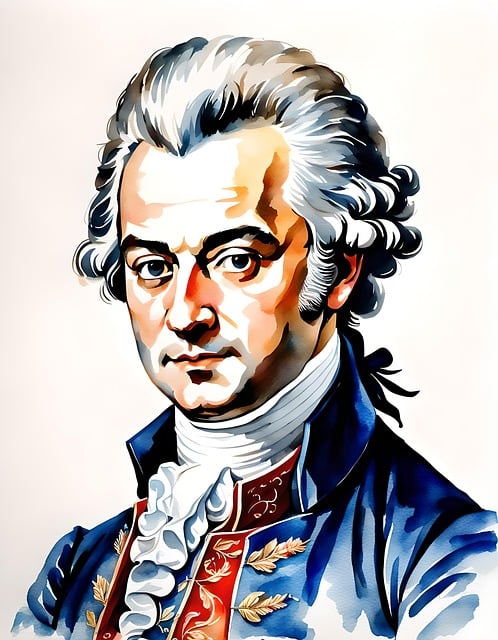
Wolfgang Amadeus Mozart, a prodigious composer of the Classical era, has left an indelible mark on the world of music that continues to resonate in modern times. His influence extends far beyond the boundaries of classical music, permeating various genres and inspiring countless musicians and composers. To understand the legacy of Mozart in modern music, it is essential to explore the elements of his work that have transcended time and continue to inspire contemporary artists.
Mozart’s music is characterized by its clarity, balance, and transparency, qualities that have become foundational in the development of Western music. His ability to blend complexity with accessibility has made his compositions timeless, serving as a benchmark for musical excellence. This balance is evident in his symphonies, operas, and chamber music, where intricate structures are presented with an apparent effortlessness. As a result, modern composers often look to Mozart’s work for inspiration, seeking to emulate his mastery of form and expression.
Moreover, Mozart’s influence is not confined to the realm of classical music. His compositions have been adapted and reinterpreted across various genres, including jazz, rock, and pop. Jazz musicians, for instance, have long admired Mozart’s improvisational skills, which are evident in his piano concertos and sonatas. This admiration has led to jazz interpretations of his work, where artists infuse Mozart’s melodies with their own improvisational flair, creating a fusion of classical and jazz elements that highlights the versatility of his music.
In the world of rock and pop, Mozart’s influence is equally significant. Many contemporary artists have drawn inspiration from his melodies and harmonic progressions, incorporating them into their own compositions. The Beatles, for example, were known to have been influenced by classical music, including the works of Mozart, which can be heard in the sophisticated arrangements and harmonic structures of their songs. This cross-genre influence underscores the universality of Mozart’s music and its ability to transcend cultural and stylistic boundaries.
Furthermore, Mozart’s legacy is evident in the educational sphere, where his compositions are frequently used as teaching tools for aspiring musicians. His works are often included in music curricula around the world, serving as exemplary models for students to study and perform. The technical demands and expressive depth of his music provide valuable lessons in musicianship, encouraging students to develop their skills and interpretative abilities. This educational impact ensures that Mozart’s influence will continue to be felt by future generations of musicians.
In addition to his direct influence on music, Mozart’s life and career have inspired numerous biographical works, films, and theatrical productions. These portrayals have contributed to the enduring fascination with his genius and have helped to keep his legacy alive in popular culture. The 1984 film „Amadeus,” for instance, brought Mozart’s story to a wider audience, sparking renewed interest in his music and life.
In conclusion, the legacy of Wolfgang Amadeus Mozart in modern music is both profound and multifaceted. His compositions continue to inspire and challenge musicians across genres, while his life story captivates audiences worldwide. Through his timeless music and enduring influence, Mozart remains a central figure in the world of music, bridging the past and present in a harmonious celebration of artistic excellence.
Mozart’s Relationship With His Contemporaries
Wolfgang Amadeus Mozart, a towering figure in the world of classical music, was not only a prodigious composer but also a man deeply embedded in the musical and social fabric of his time. His relationships with his contemporaries were complex and multifaceted, reflecting both the competitive nature of the musical world and the collaborative spirit that often characterized the artistic community of the 18th century. Understanding these relationships provides valuable insight into Mozart’s life and work, as well as the broader cultural context in which he operated.
Mozart’s interactions with other composers and musicians were shaped by a combination of admiration, rivalry, and mutual influence. One of the most notable figures in Mozart’s circle was Joseph Haydn, an older composer whom Mozart greatly admired. The two shared a deep mutual respect, with Haydn famously declaring to Mozart’s father, Leopold, that „your son is the greatest composer known to me either in person or by name.” This admiration was not one-sided; Mozart dedicated a set of six string quartets to Haydn, which are now considered some of his finest chamber works. This dedication was not merely a gesture of respect but also an acknowledgment of Haydn’s influence on Mozart’s compositional style, particularly in the realm of string quartets.
In contrast, Mozart’s relationship with Antonio Salieri has often been mischaracterized as one of intense rivalry, largely due to fictionalized accounts such as Peter Shaffer’s play „Amadeus.” In reality, while there may have been professional competition between the two, there is little evidence to suggest any deep-seated animosity. In fact, Mozart and Salieri occasionally collaborated, and Salieri even conducted some of Mozart’s works. This suggests a more nuanced relationship, one that was likely marked by both competition and mutual respect, as was common among composers vying for patronage and recognition in the vibrant musical scene of Vienna.
Moreover, Mozart’s interactions with other musicians extended beyond composers to include performers and patrons. His relationship with the clarinetist Anton Stadler, for instance, was particularly fruitful. Stadler’s virtuosity inspired Mozart to compose several works for the clarinet, including the renowned Clarinet Concerto in A major, which remains a staple of the clarinet repertoire. This collaboration highlights how Mozart’s relationships with performers could directly influence his compositional output, leading to the creation of works that showcased the talents of his contemporaries.
Additionally, Mozart’s connections with patrons and the aristocracy were crucial to his career, though they were not without their challenges. While he enjoyed the support of influential figures such as Emperor Joseph II, who commissioned several of his operas, Mozart often struggled with the constraints imposed by the patronage system. His desire for artistic freedom sometimes clashed with the expectations of his patrons, leading to tensions that were emblematic of the broader shifts occurring in the music world as composers began to seek greater independence.
In conclusion, Mozart’s relationships with his contemporaries were characterized by a dynamic interplay of admiration, competition, and collaboration. These interactions not only shaped his career but also enriched the musical landscape of his time. By examining these relationships, we gain a deeper understanding of Mozart as both an individual and an artist, as well as the vibrant cultural milieu in which he lived and worked. Through his connections with fellow composers, performers, and patrons, Mozart navigated the complexities of the 18th-century music world, leaving an indelible mark on the history of Western music.
The Influence Of Mozart On Classical Music
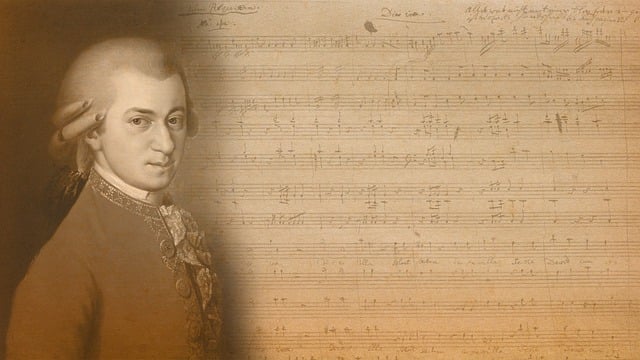
Wolfgang Amadeus Mozart, a towering figure in the world of classical music, has left an indelible mark on the genre, influencing countless composers and musicians who followed in his footsteps. Born in Salzburg in 1756, Mozart’s prodigious talent was evident from a young age, and his contributions to classical music have been both profound and far-reaching. His influence is not only evident in the works of his contemporaries but also in the evolution of musical forms and the development of the classical style.
Mozart’s impact on classical music can be seen in his mastery of various musical forms, including the symphony, concerto, chamber music, and opera. His ability to blend different styles and techniques set a new standard for composers of his time. For instance, his symphonies, such as Symphony No. 41 in C major, „Jupiter,” showcase his innovative use of counterpoint and thematic development, which have inspired generations of composers. Furthermore, his piano concertos, particularly those composed in Vienna, are celebrated for their lyrical beauty and structural clarity, influencing the concerto form for years to come.
In addition to his technical prowess, Mozart’s music is renowned for its emotional depth and expressiveness. His operas, such as „The Marriage of Figaro,” „Don Giovanni,” and „The Magic Flute,” are masterpieces that combine dramatic narrative with musical sophistication. These works not only elevated the operatic form but also demonstrated Mozart’s keen understanding of human emotions and his ability to convey them through music. As a result, his operas have become staples of the repertoire, continuing to captivate audiences worldwide.
Moreover, Mozart’s influence extends beyond his compositions to his role as a bridge between the Baroque and Classical periods. His music embodies the clarity, balance, and formality characteristic of the Classical era while retaining the complexity and ornamentation of the Baroque. This synthesis of styles paved the way for future composers, such as Ludwig van Beethoven, who admired Mozart’s work and drew inspiration from it. Beethoven’s early compositions, in particular, reflect the influence of Mozart’s melodic inventiveness and structural precision.
Furthermore, Mozart’s contributions to chamber music, including his string quartets and quintets, have had a lasting impact on the genre. His ability to create intricate dialogues between instruments and his exploration of harmonic possibilities expanded the expressive potential of chamber music. Composers like Franz Schubert and Johannes Brahms later built upon these foundations, further enriching the chamber music tradition.
In addition to his direct influence on composers, Mozart’s music has played a crucial role in shaping the public’s perception of classical music. His works are often seen as the epitome of the Classical style, embodying the ideals of beauty, balance, and proportion. As a result, Mozart’s music has become a benchmark against which other compositions are measured, and his legacy continues to inspire musicians and audiences alike.
In conclusion, Wolfgang Amadeus Mozart’s influence on classical music is both profound and enduring. His mastery of musical forms, emotional expressiveness, and ability to bridge different stylistic periods have left an indelible mark on the genre. Through his compositions, Mozart not only shaped the course of classical music but also set a standard of excellence that continues to inspire and challenge musicians to this day.
Exploring Mozart’s Most Iconic Compositions
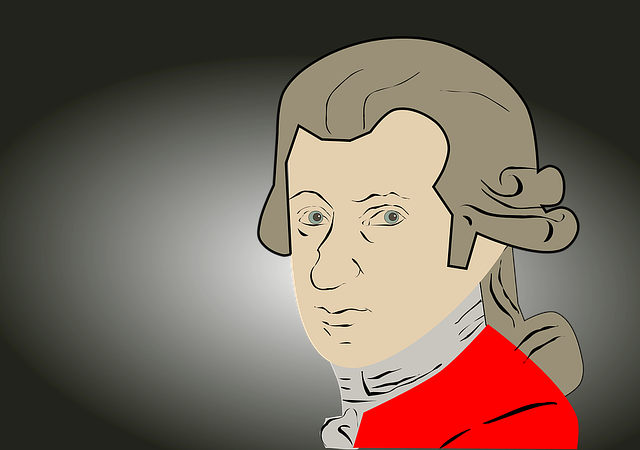
Wolfgang Amadeus Mozart, a towering figure in the world of classical music, left an indelible mark on the art form with his prodigious output and unparalleled genius. His compositions, which span a wide array of genres, continue to captivate audiences and inspire musicians worldwide. Among his vast oeuvre, several works stand out as particularly iconic, showcasing his mastery of form, melody, and emotional depth.
One cannot discuss Mozart’s most iconic compositions without mentioning his symphonies, particularly Symphony No. 41 in C major, K. 551, commonly known as the „Jupiter” Symphony. This work, completed in 1788, is celebrated for its grandeur and complexity. The final movement, a masterful fugue, exemplifies Mozart’s ability to blend intricate counterpoint with lyrical beauty, creating a sense of both intellectual rigor and emotional resonance. The „Jupiter” Symphony remains a staple of the orchestral repertoire, admired for its innovative structure and the way it encapsulates the spirit of the Classical era.
Transitioning from symphonic to operatic works, Mozart’s contributions to opera are equally significant. „The Marriage of Figaro,” „Don Giovanni,” and „The Magic Flute” are among his most renowned operas, each demonstrating his exceptional skill in character development and dramatic storytelling. „The Marriage of Figaro,” with its intricate plot and rich characterizations, showcases Mozart’s ability to weave together humor and social commentary, while „Don Giovanni” delves into darker themes, exploring the complexities of human nature through its titular character. „The Magic Flute,” on the other hand, combines elements of fantasy and enlightenment philosophy, offering a unique blend of entertainment and intellectual depth. These operas not only highlight Mozart’s compositional prowess but also his keen understanding of human emotions and societal dynamics.
In addition to his symphonies and operas, Mozart’s piano concertos are a testament to his virtuosity and innovation. The Piano Concerto No. 21 in C major, K. 467, often referred to as the „Elvira Madigan” concerto, is particularly noteworthy. Its second movement, a serene and lyrical Andante, has captured the hearts of listeners with its ethereal beauty and emotional poignancy. This concerto, like many of Mozart’s works for piano, exemplifies his ability to balance technical brilliance with expressive depth, making it a favorite among pianists and audiences alike.
Furthermore, Mozart’s chamber music, including his string quartets and quintets, reveals another facet of his genius. The String Quartet No. 19 in C major, K. 465, known as the „Dissonance” Quartet, is especially remarkable for its bold harmonic experimentation. The quartet’s opening, with its unexpected and unconventional harmonies, challenged the musical norms of the time and demonstrated Mozart’s willingness to push the boundaries of classical music. This adventurous spirit, coupled with his innate sense of form and melody, solidified his reputation as a pioneering composer.
In conclusion, Wolfgang Amadeus Mozart’s most iconic compositions continue to resonate with audiences due to their timeless beauty and profound emotional impact. Whether through the grandeur of his symphonies, the dramatic depth of his operas, the virtuosity of his piano concertos, or the innovative spirit of his chamber music, Mozart’s works remain a testament to his extraordinary talent and enduring legacy in the world of classical music.
The Early Life And Musical Genius Of Wolfgang Amadeus Mozart
Wolfgang Amadeus Mozart, a name synonymous with musical genius, was born on January 27, 1756, in Salzburg, a city that was then part of the Holy Roman Empire. From an early age, Mozart exhibited an extraordinary aptitude for music, a talent that would eventually earn him a place among the most revered composers in history. His father, Leopold Mozart, was a respected composer and musician in his own right, and he quickly recognized his son’s prodigious abilities. Under Leopold’s tutelage, young Wolfgang began to explore the world of music, demonstrating an uncanny ability to understand and create complex compositions.
By the age of three, Mozart was already playing the clavier, and by five, he was composing his own pieces. His early compositions, though simple, displayed a remarkable understanding of musical structure and harmony. As he grew, so did his reputation as a child prodigy. Leopold, eager to showcase his son’s talents, organized a series of tours across Europe. These tours not only introduced Mozart to the musical elite of the time but also exposed him to a wide array of musical styles and traditions. This exposure was instrumental in shaping his unique compositional voice, which would later blend elements from various European musical traditions.
During these formative years, Mozart’s ability to absorb and synthesize different musical influences became increasingly apparent. He was particularly influenced by the works of Johann Sebastian Bach and George Frideric Handel, whose compositions he studied meticulously. This period of intense learning and performance laid the foundation for Mozart’s later works, which would come to be characterized by their complexity, emotional depth, and technical precision.
As Mozart transitioned from childhood to adolescence, his compositions began to reflect a maturity beyond his years. His early symphonies, operas, and chamber music pieces were met with critical acclaim, further cementing his status as a musical wunderkind. Despite his growing fame, Mozart’s life was not without challenges. The constant travel and performance schedule took a toll on his health and personal life, and he often struggled with the pressures of living up to the expectations placed upon him.
Nevertheless, Mozart’s passion for music never waned. He continued to push the boundaries of musical expression, experimenting with form and structure in ways that were both innovative and daring. His ability to convey profound emotion through music was unparalleled, and his compositions resonated with audiences across Europe. As he matured, Mozart’s works became increasingly sophisticated, reflecting his deepening understanding of human emotion and experience.
In conclusion, the early life of Wolfgang Amadeus Mozart was marked by an extraordinary display of musical talent and an insatiable curiosity for the art form. His formative years were spent honing his craft, absorbing diverse influences, and developing a unique compositional style that would leave an indelible mark on the world of classical music. Despite the challenges he faced, Mozart’s dedication to his art never wavered, and his early works laid the groundwork for a legacy that continues to inspire musicians and music lovers alike. His journey from a precocious child prodigy to a master composer is a testament to the enduring power of creativity and the human spirit.
Conclusion
Wolfgang Amadeus Mozart, an Austrian composer of the Classical era, is widely regarded as one of the greatest composers in the history of Western music. Born in 1756, he demonstrated prodigious talent from a young age, composing his first pieces by the age of five and performing before European royalty. Over his short life, Mozart composed more than 600 works, including symphonies, operas, chamber music, piano concertos, and choral music, many of which are considered pinnacles of their respective forms. His music is celebrated for its melodic beauty, formal elegance, and emotional depth, showcasing a mastery of the musical language of his time while also pushing its boundaries. Despite facing financial difficulties and dying at the young age of 35, Mozart’s influence on subsequent generations of composers has been profound, and his works continue to be performed and cherished worldwide. His legacy endures as a testament to his extraordinary genius and his contributions to the development of Western classical music.